Play It Anyway: A Straight-Talk Guide to Emulation, Legality, and Your Own Moral Compass

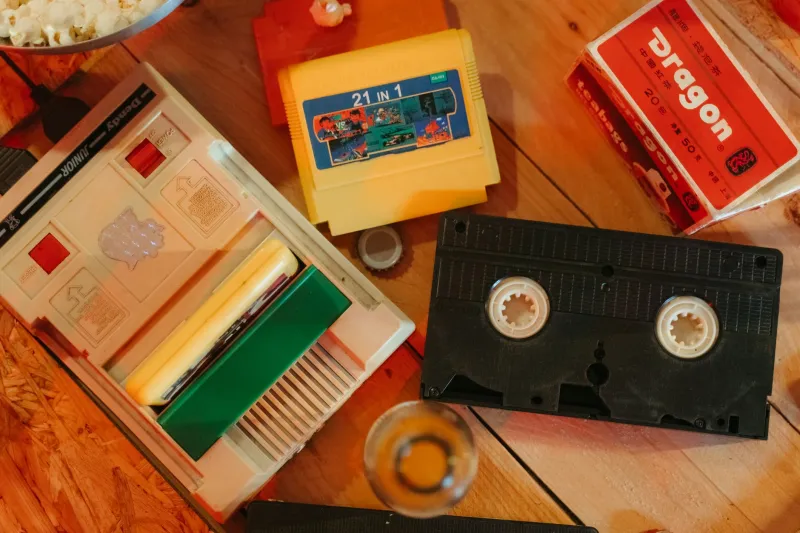
Photo by Photo by Patrick on Unsplash on Unsplash
Let's just say it upfront: if you've ever downloaded a ROM, you're in good company. Tens of millions of people in the United States alone use emulators to play classic games, and most of them have never once thought carefully about what's technically legal and what isn't. That's not a judgment — it's just the reality of a hobby that exists in a space where the law, corporate policy, and cultural preservation are constantly bumping into each other.
So instead of watering this down into vague disclaimers, let's actually talk about it. What's genuinely illegal? What do publishers actually care about? And how do you make choices that line up with both your conscience and your desire to play Chrono Trigger on your laptop?
The Legal Reality (Which Is Messier Than Anyone Admits)
Here's the part that makes lawyers nervous and forum arguments go sideways: emulators themselves are generally legal in the United States. The courts confirmed this back in 1999 with the Sony v. Connectix case, which ruled that reverse-engineering a console's BIOS for the purpose of creating a compatible emulator constitutes fair use. Emulation as a technology? Largely fine.
ROMs are where things get complicated.
Downloading a ROM of a game you don't own is, technically, copyright infringement under U.S. law. The "I own the cartridge so I can download the ROM" argument — while emotionally logical — has never been tested definitively in court and doesn't hold up cleanly under current copyright statute. That's the uncomfortable truth.
However — and this is a big however — the practical enforcement reality is almost entirely different. Nintendo has gone after ROM hosting sites aggressively (RIP EmuParadise's original library). Capcom sent cease-and-desist letters to some fan preservation projects. But individual users downloading ROMs for personal use? There's essentially no documented case of a regular person being prosecuted for that in the US.
That doesn't make it legal. It just means the risk calculus is very different from what the scary warning screens would have you believe.
Abandonware: The Category That Doesn't Legally Exist (But Morally Might)
"Abandonware" is a community term, not a legal classification. It refers to software — usually older games — that's no longer sold, supported, or actively exploited commercially by its rights holder. The logic goes: if nobody's making money off it and nobody's selling it, downloading it isn't really hurting anyone.
Again, emotionally, that tracks. Legally, copyright doesn't expire just because a company stopped caring. A game published in 1993 is still under copyright protection, full stop, regardless of whether the original developer went bankrupt or the publisher was acquired four times since then.
That said, the moral weight of downloading an abandonware title is meaningfully different from pirating a game that's actively for sale. Most archivists, indie developers, and preservation advocates draw this line clearly.
"When a game is genuinely inaccessible — not on any current platform, not sold anywhere, the developer dissolved — I think most reasonable people understand why someone would emulate it," says one indie developer who asked to remain anonymous. "What bothers me is when people use 'preservation' as an excuse for games that are literally available on Steam right now."
That's a fair distinction worth sitting with.
Publishers Who Actually Support Preservation
Not every major company treats emulation and archiving as the enemy. A few worth knowing about:
Nightdive Studios has built its entire business model around preserving and re-releasing classic PC and console games. They actively work with rights holders to make old games available legally and affordably. If a Nightdive remaster exists, that's your cleanest option.
Limited Run Games has made a name for itself giving physical releases to games that might otherwise vanish. Their catalog is a goldmine for players who want legitimate copies of obscure titles.
The Internet Archive operates a browser-based emulation library with a collection of classic games that's legally murky but has so far survived legal challenges under a digital preservation argument. It's widely used by researchers, educators, and curious players.
On the flip side, Nintendo is famously aggressive about protecting its IP — even titles it has no current plans to sell. Their takedown of fan projects and ROM sites is well-documented, and they've shown no signs of softening that stance.
Gray Market Options Worth Knowing
Between "fully legal" and "download from a sketchy site," there's a real middle ground.
Official digital storefronts should always be your first stop. Nintendo Switch Online offers a rotating library of NES, SNES, and N64 classics. PlayStation Plus Premium includes a catalog of PS1 and PS2 games. These are legitimate, cheap, and support the ecosystem.
GOG.com has done remarkable work making classic PC games DRM-free and legally accessible. Their catalog includes a ton of late '90s and early 2000s titles that would otherwise require piracy or expensive physical copies.
Buying physical, then emulating is a practice many collectors use — own the cartridge, play the ROM. Again, not airtight legally, but widely accepted as an ethical middle ground in the community.
Making Peace With Your Own Choices
At the end of the day, nobody here is going to tell you what to do. Emulation exists in a space where the law, ethics, and practicality don't always point in the same direction. A game that's been out of print for 25 years and costs $200 on eBay presents a different moral equation than downloading a game that launched last year.
What we'd encourage is just being honest with yourself about the choice you're making. Are you preserving access to something genuinely unavailable? Are you skipping a $7.99 purchase on a platform that has it right now? Those are different things, and they deserve different consideration.
Retro gaming at its best is about connection — to games, to memories, to a community of people who care about keeping this stuff alive. The how matters, even when the answers aren't clean. Play thoughtfully, support developers when you can, and keep digging.