Racing the Delete Button: Inside the Collector Networks Quietly Saving Games From Corporate Oblivion
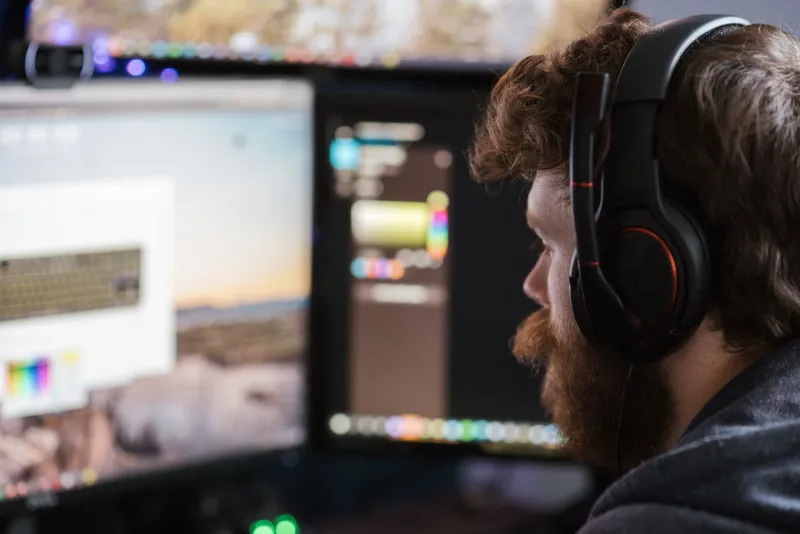
Somewhere in a climate-controlled spare bedroom in Ohio, a guy named Marcus has roughly 4,000 game files backed up across mirrored hard drives, two NAS boxes, and an off-site cloud archive he pays for out of pocket. He doesn't sell them. He doesn't stream them. He just... keeps them. "I think of it like being a librarian," he told me over Discord. "Except the library keeps catching fire, and nobody in charge seems to care."
Marcus is not alone. Across the US, a sprawling, informal coalition of collectors, ROM archivists, and preservation hobbyists is quietly doing work that most major studios won't — systematically capturing and storing games before licensing agreements expire, servers go dark, and digital storefronts quietly pull the plug. It's painstaking, legally murky, and, depending on who you ask, either an act of cultural heroism or straight-up theft.
The truth, as usual, lives somewhere uncomfortable in the middle.
The Clock Is Always Running
Here's the part that doesn't get talked about enough: digital games are not permanent. When you buy a game on a digital storefront, you're not really buying it — you're licensing access to it, for as long as the company decides to keep the lights on. And companies, as we've seen repeatedly, do not always keep the lights on.
The closure of older storefronts, the quiet delisting of titles when music licenses lapse, the collapse of online-only games when server support ends — these aren't edge cases. They're industry patterns. A 2023 study by the Video Game History Foundation found that roughly 87% of classic games are out of print and essentially inaccessible through legitimate means. That number is staggering when you sit with it.
For preservation communities, every delisting announcement is a fire alarm. When a major platform announces it's pulling older titles, the scramble begins immediately — archivists coordinate across forums and private Discord servers to make sure someone, somewhere, has a clean copy before the window closes.
How the Networks Actually Work
The preservation ecosystem isn't one unified movement. It's more like a loose federation of overlapping communities, each with different methods, ethics, and risk tolerances.
On one end, you have the institutional players — organizations like the Internet Archive and the Video Game History Foundation, which operate (mostly) within legal frameworks, lobbying for copyright exemptions and working with willing publishers to legitimize preservation. Their work is visible, documented, and relatively above board.
Then there's the middle layer: private collector groups who operate in forums and encrypted chat servers, sharing dumps of physical cartridges and discs they personally own. Many of them follow a personal code — only archiving what they've legitimately purchased, never profiting from distribution, keeping their collections private rather than public. "I've dumped probably 300 cartridges," one collector told me, asking to be identified only as "Digger." "Every single one I own physically. I'm not running a piracy ring. I'm making sure my stuff doesn't just vanish when the cart dies."
Further out toward the edge, you find the more aggressive archivists — people who argue that if a game is commercially unavailable, the moral calculus changes entirely. They're the ones populating the public ROM sites, reasoning that you can't pirate something nobody is selling.
Studios, predictably, disagree.
The Legal Gray Zone (And Why It's Not Getting Clearer)
US copyright law is not built for this problem. The DMCA includes a narrow preservation exemption for libraries and archives, but it's riddled with conditions that make it nearly useless for independent collectors. You generally can't make a backup copy of a game you own for preservation purposes. You can't legally circumvent copy protection even to archive something that's otherwise unobtainable. The law hasn't caught up to the reality of digital media — and given the lobbying power of major publishers, it's not clear it ever will.
The Video Game History Foundation has been one of the loudest voices pushing for reform, arguing in Copyright Office proceedings that games deserve the same cultural protection we extend to film and literature. So far, progress has been slow.
In the meantime, individual collectors absorb the legal risk personally. Most operate under the assumption that as long as they're not profiting and not widely distributing, they're flying below the radar. That's probably true. Probably.
"We're the Only Ones Doing It"
What's striking when you talk to people inside these communities is how little bitterness there is toward gaming as an industry — and how much there is toward specific corporate decisions. Most of these folks are deeply passionate fans. They got into preservation because they love games, not because they want to burn anything down.
"I've spent thousands of dollars on this hobby," said a collector in the Pacific Northwest who goes by the handle RetroVault. "I buy physical copies, I support publishers when I can, I back Kickstarters for indie preservation projects. But when a company decides a game isn't profitable enough to maintain and just... erases it? Someone has to step up. And it's not going to be the company."
That frustration is shared widely. The gaming industry has a complicated relationship with its own history — happy to monetize nostalgia through remasters and anniversary editions, less interested in maintaining access to the full catalog that nostalgia actually draws from. When a beloved cult title disappears from digital shelves because a music license expired or a publisher got acquired, there's rarely any announcement, any warning, or any alternative offered to fans.
Collectors see themselves as filling a gap the industry created.
Where the Line Gets Drawn
Not everyone in the preservation community agrees on how far is too far. The debates inside these spaces can get heated. Should publicly accessible ROM sites be celebrated or condemned? Is there a meaningful ethical difference between archiving for personal use versus making files freely available to anyone?
Most of the collectors I spoke with draw the line at commercial availability. If a game is actively being sold through legitimate channels, they won't touch it. If it's been delisted, if the developer is defunct, if there's no realistic way to give the rights holder money even if you wanted to — that's when they consider it fair game.
"I'm not trying to hurt anyone's sales," Digger told me. "If a game is for sale, buy it. Support the people who made it. But if it's gone? Then preservation isn't piracy. It's archaeology."
That framing — games as cultural artifacts rather than commercial products — is central to how the preservation community understands its own mission. And honestly? It's hard to argue against when you look at what's already been lost.
The Stuff That's Already Gone
Ask any longtime collector what keeps them up at night, and they'll start listing titles. Online-only games with no offline mode, wiped from existence the moment servers shut down. Flash-based web games from the early 2000s that survived only because a handful of obsessives grabbed them before Adobe pulled the plug. Mobile games from the early smartphone era that will never run on modern hardware and exist only in screenshots and YouTube videos.
Every one of those losses is permanent. There's no going back.
That's the thing about preservation work — you only notice it when it fails. When it succeeds, it's invisible. The game is just... there, accessible, playable, alive. The years of effort, the legal risk, the personal expense — none of that shows up when you boot the file.
Marcus, back in his climate-controlled spare bedroom in Ohio, is fine with that. "I don't need credit," he said. "I just need the games to exist. That's the whole point."
Somebody has to dig them up before they're gone for good. Might as well be the people who loved them enough to try.