Here Today, Gone Tomorrow: The Real Cost of Nintendo's Digital Disappearing Act
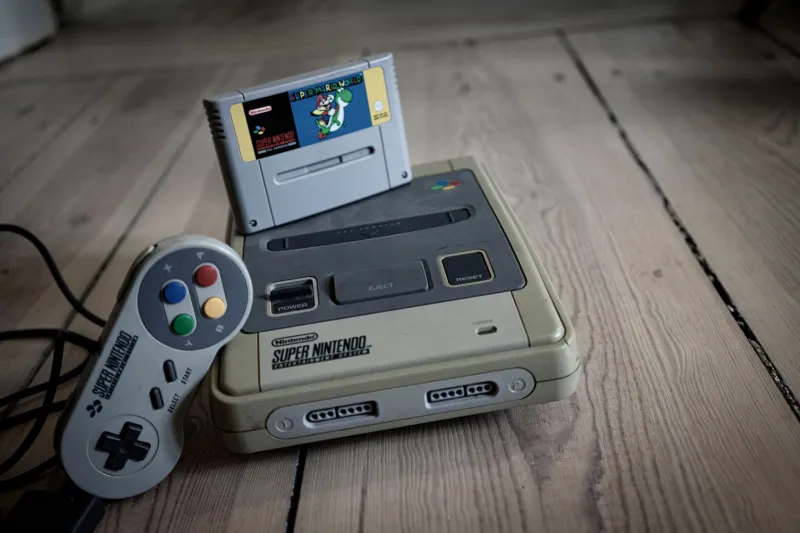
There's a particular kind of dread that hits when you open the Nintendo eShop and notice a game you've been meaning to buy is just... gone. No farewell announcement. No discount window. No explanation beyond a vague note about a "limited availability period" that already expired. If you've been gaming on Nintendo hardware for any length of time, you've probably felt it.
Nintendo has made a habit of treating its own digital library like a seasonal menu — rotating titles in and out of availability in ways that feel less like curation and more like corporate housekeeping. And as more players build their collections digitally, the stakes of that habit are getting harder to ignore.
The Vanishing Act, By the Numbers
Let's start with the most visible example. Super Mario Bros. 35 launched in October 2020 as a free download for Nintendo Switch Online members. It was a genuinely clever battle royale twist on the original NES classic — 35 players racing to finish levels while sending enemies to each other's screens. Players loved it. Critics praised it. And then, on March 31, 2021, Nintendo shut it down. Permanently. The servers went dark, the download was removed, and anyone who hadn't grabbed it in time was simply out of luck.
Nintendo framed it as a "limited-time" release from the start, so technically they held up their end of the deal. But "technically" doesn't soften the frustration of watching a beloved game get erased from existence because a calendar date flipped.
Mario 35 isn't alone. Fire Emblem Warriors quietly disappeared from the eShop. Pokémon games tied to specific anniversary windows have come and gone. Dozens of Virtual Console titles that were available on the Wii and Wii U never made it to Switch at all. The cumulative effect is a digital library full of gaps where beloved games used to be.
Why Does Nintendo Do This?
The honest answer is: it's complicated, and Nintendo isn't exactly forthcoming about it.
Licensing is a big factor. Many classic titles involve music, character likenesses, or IP that's co-owned or licensed from third parties. When those agreements expire, renewing them costs money — sometimes more than the revenue a decades-old title is likely to generate. It's not glamorous, but it's real. The same dynamic has quietly killed games on Steam, PlayStation, and Xbox too.
Beyond licensing, Nintendo has a well-documented philosophy around scarcity. The company has historically used limited availability to drive demand — physical amiibo runs, Fire Emblem cartridge shortages, the infamous NES Classic stock situation. Applying that same logic to digital releases feels like a stretch, but the pattern is hard to ignore. When Super Mario 3D All-Stars was pulled from sale in March 2021 (same deadline as Mario 35, interestingly), Nintendo confirmed it was always intended as a limited release. The implication being: scarcity, even artificial digital scarcity, is a feature, not a bug.
There's also IP protection to consider. Nintendo guards its trademarks and properties more aggressively than almost any other publisher in the industry. Keeping older titles in wide circulation can complicate that — not legally in any simple way, but strategically. A game that's easy to access is a game that's easy to screenshot, clip, mod, and redistribute. Controlled availability is controlled narrative.
What Collectors Are Actually Doing About It
The retro gaming community has been watching this situation with increasing urgency, and a lot of players have drawn a clear conclusion: physical media is your only real insurance policy.
Cartridge prices for Nintendo titles have been climbing for years, partly driven by nostalgia and partly by this exact dynamic. When digital availability becomes unreliable, physical copies become the only guaranteed path to long-term access. A cartridge on your shelf doesn't require a server to stay online. It doesn't expire. It doesn't get quietly removed during a licensing renegotiation.
Preservation-minded players have also been leaning harder into archiving efforts. Organizations like the Video Game History Foundation have been vocal about the stakes here — their research has found that a staggering percentage of classic games are already considered lost or critically inaccessible. Nintendo's delisting habits don't help that number.
Emulation sits in the background of all of this, legally murky but practically significant. Many players who own physical copies of games they've lost access to digitally have turned to emulators to keep playing. It's a conversation with real ethical texture — one we've explored before at Cazimbo — but the bottom line is that the community has built its own preservation infrastructure precisely because official channels keep failing them.
The Bigger Question: What Does "Owning" a Digital Game Even Mean?
This is where the conversation gets genuinely uncomfortable.
When you buy a digital game on the Nintendo eShop, you're not purchasing the game. You're purchasing a license to access the game under conditions Nintendo controls. That's not a cynical interpretation — it's literally what the terms of service say. And when Nintendo decides those conditions have changed, your "purchase" can evaporate overnight.
For a generation of players who grew up with cartridges and discs, that's a fundamentally different relationship with ownership. A copy of Super Mario Bros. 3 in a gray cartridge will still work on original hardware decades from now. A digital license for a game Nintendo has delisted is worth exactly nothing.
This isn't a Nintendo-exclusive problem — Sony shut down the PS3 and Vita storefronts, and Microsoft has delisted plenty of Xbox titles over the years. But Nintendo's aggressive use of limited-window releases makes the issue feel more intentional, more calculated, and frankly more frustrating.
What You Can Do Right Now
If you care about your library surviving long-term, a few practical moves are worth considering.
First, buy physical when you can. For Nintendo titles especially, a cartridge is a commitment in a way a digital license simply isn't. Second, pay attention to delisting announcements — they do sometimes happen, and the window between announcement and removal can be short. Third, if you have digital purchases on older hardware like the Wii U or 3DS, don't assume those licenses will transfer gracefully to future platforms. Nintendo's track record on backward compatibility is inconsistent at best.
And maybe most importantly: stay connected to the community. The retro and preservation scenes are full of people tracking this stuff closely, flagging games that are at risk, and sharing resources for players who want to hold onto the things they love.
The Shelf Will Outlast the Server
There's something almost poetic about the fact that the oldest format in home gaming — the physical cartridge — is also the most durable. While the industry races toward streaming and subscription models, the humble cart just sits on the shelf, patient and permanent.
Nintendo's digital delisting habit isn't going to change anytime soon. The licensing math, the scarcity philosophy, the IP protectionism — none of those pressures are going away. But the community's response to it has been clear and consistent: dig up the physical copies, support preservation efforts, and treat every digital purchase like the temporary loan it legally is.
Your collection is only as permanent as you make it. And right now, that means thinking a lot harder about what's actually sitting on your shelf versus what's sitting in someone else's server.