Blind Bids and Big Payoffs: What's Really Happening in the Retro Game Mystery Box Market
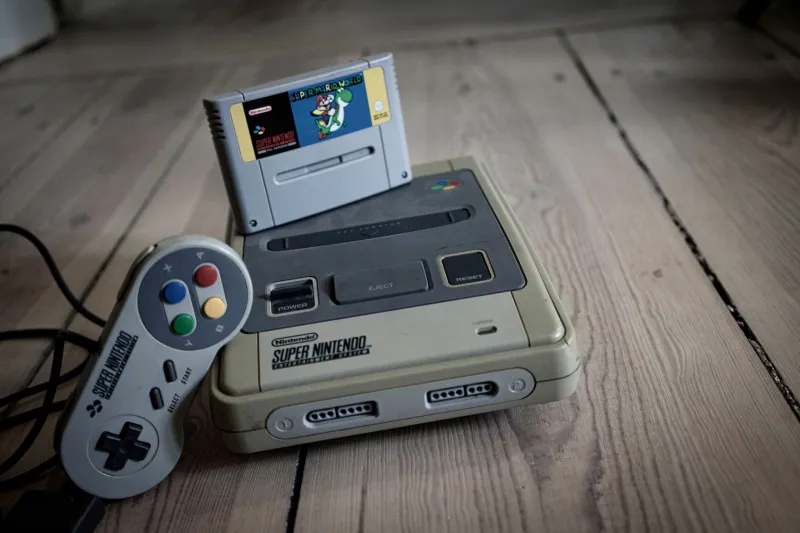
There's a specific kind of excitement that comes with not knowing. Rip open a mystery box, and you might find a water-damaged copy of Madden '98 or a sealed Chrono Trigger that somebody's grandmother kept in a closet for thirty years. That's the whole pitch — and right now, thousands of collectors across the US are buying into it, sometimes to the tune of $500 or more per haul.
The retro game mystery box market has quietly exploded over the last few years, fueled by a mix of nostalgia, economic logic, and the very human thrill of the unknown. And while graded, authenticated games dominate the headlines with their record auction prices, a whole parallel economy has built up around the stuff that never sees a grading company's hands.
Why Skip Grading in the First Place?
Professional grading sounds like the smart play on paper. You send your game to a company like Wata or VGA, they assess the condition, seal it in a case, and suddenly your cartridge has a documented value. Simple, right?
Except it's not. Grading costs money — sometimes a lot of it — and turnaround times have stretched into months. For a collector sitting on a bulk lot of 80 SNES games they bought at an estate sale, submitting everything for grading isn't just impractical. It's financially backwards. The math only works if you already know what you have and you're confident the grade will justify the cost.
That's exactly where the mystery box market steps in. Sellers — often collectors themselves, or estate liquidators, or thrift store resellers — package up lots of unverified games and move them fast. Buyers accept the uncertainty in exchange for pricing that reflects it. A lot that might contain a $400 game gets sold for $150 because nobody's done the homework yet. The risk is baked into the deal.
For buyers who know their stuff, that's not a gamble. That's an edge.
Who's Actually Buying These Things?
The mystery box buyer isn't usually a first-timer who stumbled onto eBay. The people spending real money on ungraded lots tend to fall into a few distinct camps.
First, there are the experienced hunters — collectors who've spent years developing a mental database of what rare games look like, which label variants are worth chasing, and which titles routinely get overlooked. To them, an ungraded lot is basically a speed round. They can eyeball condition, cross-reference prices in their head, and flip or keep accordingly.
Then there are the nostalgic players who aren't really in it for investment value at all. They want to play these games. They're not trying to send anything to a grader — they just want a working copy of EarthBound or Castlevania: Symphony of the Night without paying the premium that a certified copy commands. Mystery lots are a way to find playable games at something closer to reasonable prices.
Finally, you've got the resellers and flippers, who treat mystery lots the same way some people treat real estate — buy undervalued, identify what's actually there, and move the good stuff at market rate while recovering costs on the filler.
What People Are Actually Finding
Ask around in collector communities and you'll hear stories that range from "total waste of money" to "genuinely life-changing." That spread is kind of the point.
On the underwhelming end: duplicate sports titles, beat-up cartridges with missing labels, and third-party accessories nobody wanted in 1997. These show up constantly, and they're the price of admission.
But the wins are real. Collectors have pulled complete-in-box copies of games like Hagane: The Final Conflict — a Super Nintendo title so rare that loose cartridges regularly sell for $400 or more — out of bulk lots bought for less than $100 a game on average. Little Samson for NES. Panic Restaurant. Regional variants and prototype cartridges that sellers didn't recognize for what they were.
The thing is, not every seller knows exactly what they have. Estate sales in particular are a goldmine for this. Someone's collection gets liquidated, the family doesn't know what's valuable, and a lot of genuinely rare stuff moves at bulk prices because nobody stopped to look it up.
The Pricing Ripple Effect
Here's something the broader retro gaming market doesn't always talk about: the mystery box economy actually affects prices for everyone, not just the people buying hauls.
When authenticated, graded games hit record prices at auction, it creates a perception that retro gaming is only for wealthy collectors. But the ungraded market functions as a pressure valve. Games that would otherwise sit behind a $300 price tag on a specialty retailer's shelf sometimes show up in bulk lots at a fraction of that cost, making them accessible to players who just want to experience them.
At the same time, when rare games get discovered in mystery lots and quickly relisted at market value, it reinforces accurate pricing across the board. It's a messy, informal system — but it works in its own chaotic way.
Some veteran collectors argue that the mystery box market is actually healthier for the hobby long-term than the graded market. Graded games get locked in plastic cases and treated as financial instruments. Mystery lots get opened, sorted, and played. That's closer to what most of us got into this for in the first place.
How to Play It Smart
If you're thinking about jumping into the mystery lot scene, going in blind without any preparation is how you end up with a box of Madden cartridges and a lighter wallet. A few things worth knowing before you spend:
Know your platforms. Don't buy a bulk lot for a system you can't evaluate. If you grew up on Nintendo but know nothing about Sega Saturn, a Saturn mystery lot is a coin flip you're not equipped to call.
Check the seller's history. Reputable sellers in this space have track records. Look for feedback patterns, photos that show actual cartridges (not stock images), and sellers who describe condition honestly — even when it's not great.
Set a ceiling before you bid. It's easy to get caught up in auction momentum. Decide what the lot is worth to you at worst case — assume everything in it is common, low-value filler — and don't go past that number chasing the possibility of something better.
Factor in refurbishment costs. Dirty contacts, broken cases, missing manuals — all of that has a cost if you're trying to bring games up to a sellable or even playable condition. Build that into your math.
The Thrill Doesn't Hurt Either
Look, part of what makes this market work is that it's genuinely fun. Opening a mystery lot has the same energy as digging through a thrift store bin or cracking a pack of trading cards — that moment of not-knowing is its own reward, separate from the outcome.
For nostalgic players who miss the era when you'd just find a game at a garage sale and take a chance on it, mystery lots recreate that feeling at scale. You're not shopping a curated storefront. You're digging, and sometimes what you dig up surprises you.
The retro game market has gotten serious — sometimes too serious. Mystery boxes are one corner of it that still feels like play.