Small Price, Big Finish: How Sub-$10 Indie Games Are Winning the Attention War
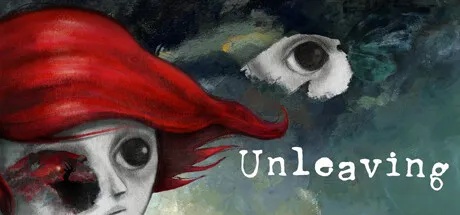
Photo: orangutan matter, CC BY-SA 4.0, via Wikimedia Commons
Check your Steam library right now. I'll wait. If you're like most US players, you've got a graveyard of $60–$70 purchases sitting at the two-hour mark — the refund boundary, the point of no return, the place where big-budget games go to be abandoned. Industry surveys have been hammering this for a while now: a huge share of players never finish the games they buy, and the bigger the game, the deeper the pile of unfinished save files.
Now look at the other side of your library. The $8 roguelike. The $5 puzzle game you bought off a Twitter recommendation. Finished. Reviewed. Some of them finished twice.
Something interesting is happening at the bottom of the price chart, and I don't think it's a fluke.
The Psychology of the Cheap Game
"When a game costs $70, players bring expectations that size can't possibly meet," one indie developer told me. She asked not to be named because she still works contract gigs for larger studios, which tells you something about how candid this conversation could get. "When it costs $9.99, players bring curiosity. Curiosity is a much better starting emotion."
The math is counterintuitive but sound. A lower price drops the psychological barrier to starting a game — and starting is the whole battle. A $70 purchase carries the weight of an investment; you need the game to justify itself, so you play cautiously, skeptically, waiting to be impressed. A $7 purchase carries the weight of a impulse buy at a gas station. If it's good, delight. If it's not, you lost a lunch.
And here's the kicker: completion rates on short, cheap games are dramatically higher. Developers on Itch.io have talked openly about this — a tight three-hour game gets finished, rated, and recommended. A 60-hour open world gets 6 hours and a refund request.
"I'd rather have 10,000 people finish my game than 50,000 people open it," another solo dev put it to me over email. "Finished players are the ones who leave reviews, tell friends, and buy your next game. Openers are just traffic."
The Blockbuster Attention Problem
Let's be honest about what the modern AAA release asks of us. Eighty-hour main stories. Battle passes with weekly obligations. Live-service loops designed by teams of economists. These games aren't built to be finished — they're built to be occupied, the way you'd occupy a gym membership you keep meaning to use.
US players have responded the way players always respond to being over-scheduled: by quietly quitting. Meanwhile, the sub-$10 scene has gone the opposite direction. Small games, tight scopes, done in an evening. The indie budget game isn't a lesser version of a big game — it's a different product entirely. It's the difference between a novel and a short story. Nobody calls a short story a failed novel.
There's also a discovery engine at work that AAA can't replicate. Steam's algorithm and Itch.io's curators surface cheap games aggressively because cheap games convert. A $4.99 title with a striking screenshot moves units; a $70 title needs a marketing budget the size of a film's. The little guys are, ironically, easier to find than ever.
The Sub-$10 Shelf: What's Actually Worth Your Evening
Not every cheap game is good, obviously. Here's my current mini-ranking of recent sub-$10 releases that earn their price tag, ranked by how likely I am to recommend them to a normal person with a job:
- The tight-and-brilliant tier: Short, polished experiences you'll finish in one or two sittings and think about for weeks. These are the ones to buy at full launch price — these devs deserve day-one support.
- The cozy-loop tier: Idle-adjacent or incremental games that respect your time by requiring almost none of it. Perfect for second-monitor play.
- The weird-experiment tier: Games that are more art piece than product. Hit rate is maybe 50%, but at $5, a 50% hit rate is a great deal.
- The asset-flip minefield: Everything else. Check reviews, check playtime screenshots, check whether the store page shows actual gameplay. If it looks like a stock photo of a game, it is one.
The specific titles rotate monthly, which is part of the fun — the sub-$10 shelf is the only part of gaming where the shelf completely turns over and nobody mourns. Check the current Steam Next Fest demos and Itch.io's bundles; that's where the next wave shows up first.
The Contrarian Take
Here's my actual argument, and I'll plant the flag on it: the sub-$10 indie boom isn't a side effect of a tough economy. It's a correction. Players got sold 80-hour obligations at premium prices, got burned, and discovered that a four-hour game that respects them costs less than a pizza. That's not a trend. That's a lesson learned.
The blockbusters will keep selling — franchises have gravity, and gravity is expensive to escape. But the games we talk about, the ones that dominate group chats and stream clips and end-of-year lists, are increasingly small, cheap, and finished.
You can't build a cultural moment out of a game nobody completes.
So the next time you're staring down a $70 pre-order, ask yourself what else that money buys on the other side of the store. Probably four finished games. Probably better stories. Definitely more of them.
Your backlog will still be there. It always is.