Reading a Generation in a Card Table: Three Estate Sales, One Empty Nest, and the Games Left Behind
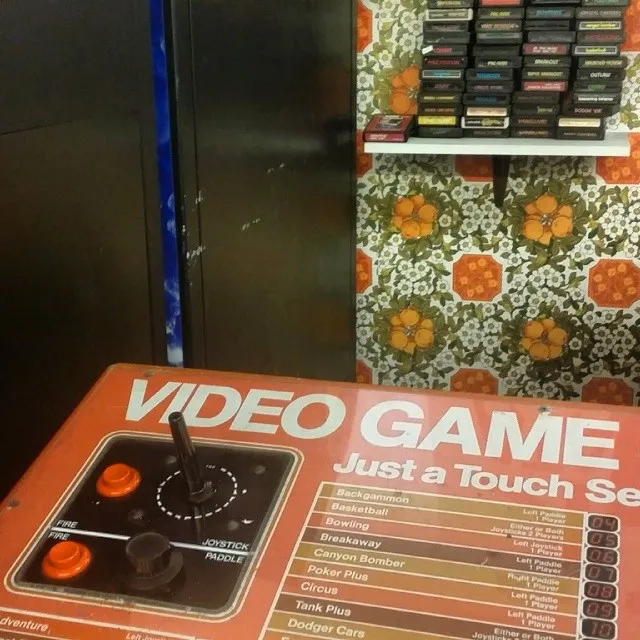
Photo: j bizzie from MINNEAPOLIS, USA, CC BY 2.0, via Wikimedia Commons
The first sale had a card table out front with a hand-lettered sign: GAMES $2. On it sat a loose copy of Madden 97, a scratched Cool Spot, and a Game Gear with a battery door held on by electrical tape. I picked up the Game Gear, felt the weight of it, and put it back down. Not because it wasn't worth two bucks. Because it told me everything I needed to know about the kid who owned it — a kid who is now probably in his forties, helping his mom price out a lifetime of possessions one Saturday morning at a time.
That's the thing nobody tells you about estate sale gaming archaeology. You're not just shopping. You're reading.
The Table Is a Diary
Sale number two was in a split-level in Centerville, the kind of house where the garage still has a basketball hoop mounted over the door. The games were organized — actually organized — in a plastic milk crate by console. Genesis, then SNES, then a lonely N64 section with exactly three titles: GoldenEye, Mario Kart 64, and Wipeout 64.
Three N64 games means a household that bought the console late, probably as a gift, probably because a younger cousin had one. The Genesis games were worn to hell — Sonic 2 so smooth the label had faded. Somebody played that console every single day for years and then, somewhere around 1998, just... stopped.
The conspicuously absent games tell stories too. No sports titles beyond the lone Madden. No COD era stuff. Whoever lived here aged out of gaming around the time the industry aged out of them — the industry got bigger budgets and harder edges, and this house quietly opted out. The milk crate is a whole life decision sitting on a driveway for two dollars an item.
Sale number three hit different. A basement, a folding chair, an older gentleman watching me sort through a shoebox of loose carts.
"My son's," he offered. "He's in Denver now. Said sell it all."
In the box: Zelda: Link to the Past, complete in box, manual included, map poster folded inside. I asked what he wanted for it. "Whatever it's worth, I guess. He said don't get ripped off."
I paid him more than it was worth. Some purchases are apologies.
How to Read a Sale Before You Pull Over
Okay, memoir over. Here's the practical part, because if you're going to spend your Saturdays doing this, do it with a system.
Look at the signage first. "Estate Sale" run by a professional company usually means prices are researched or at least Googled. Handwritten signs and a family member at a folding table? That's where the underpriced carts live. Not always — but the odds swing hard toward the family sale.
Check the date against the demographics. A sale in a neighborhood full of 1960s ranch homes built for young families? Those kids got their first consoles between 1985 and 1995. Goldmine window. A sale in a newer development? Expect Wii Sports and a bin of DVD-based junk.
Games in boxes = games that were loved and stored. Loose carts in a shoebox = played to death but usually cheap. Both are fine; know which experience you want before you start digging.
The absence test. If a sale has every console generation represented and everything is mint, someone in that house was a collector, and the family knows it. Prices will reflect it. If there's one console and ten games with actual wear, that was a real kid, and you're about to get a deal.
Cash in small bills. This is not a flea market where haggling is theater. At an estate sale, you're often dealing with someone having a hard week. Be kind, be quick, pay fair.
What I Brought Home, and What I Left
Total haul across three sales: Link to the Past CIB, a loose Streets of Rage 2, a Dreamcast with both controllers and the VMU still holding somebody's old save file (I haven't had the heart to delete it), and a copy of Blast Corps for a dollar.
Total spend: $34.
What I left behind: the electrical-tape Game Gear. And honestly, I thought about it all week. Somebody's parents bought that thing at a Kmart in 1992, probably on a random Tuesday because their kid wouldn't stop asking. It crossed the country in a move or two. It survived the great purge when the family upgraded to a Game Boy Color. And now it sat on a card table in Ohio with tape on the battery door, waiting for its next kid.
Somebody else got it. I hope they fix the tape, feed it fresh AAs, and hear that startup chime the way it was meant to be heard — too loud, in a back seat, on the way to a grandmother's house.
That's the real trade at an estate sale. You're not buying games. You're adopting them.