Stop Staring at Your Stack: A Collector's Real Guide to Organizing Retro Games You'll Actually Play
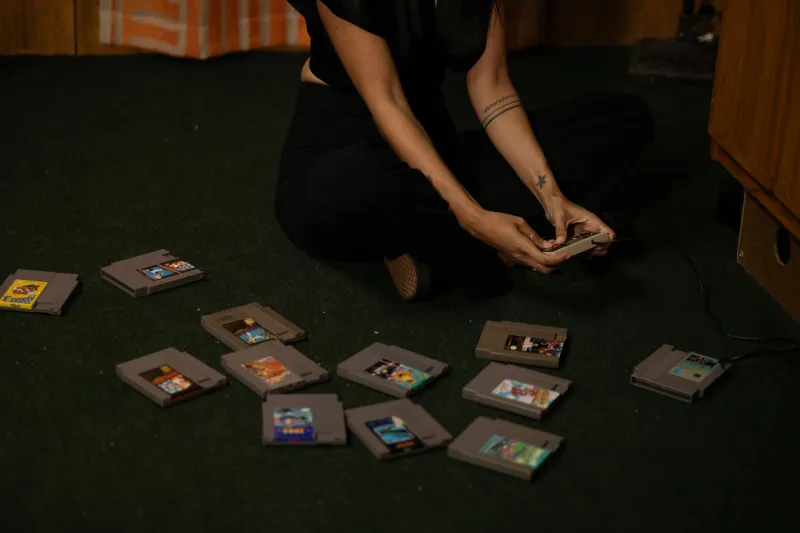
Let's be honest. At some point, the collection stopped being about playing games and started being about having them. You know the feeling — you walk past the shelf, nod approvingly at your copy of Earthbound or that mint-condition Castlevania cart, and then go boot up something you've already beaten four times. The stack grows. The dust settles. The backlog becomes a monument to good intentions.
You're not alone. This is basically the collector's curse, and it hits everyone eventually. But here's the thing: a few smart organizational choices can flip the whole dynamic. The right system doesn't just make your collection look good — it makes you use it.
We talked to collectors from Ohio to Oregon who've wrestled this problem to the ground, and pulled together the frameworks that actually work.
Why Your Current System Probably Isn't Working
Most people default to organizing by console. NES stuff here, SNES there, Genesis in the corner. It's logical. It mirrors how stores used to display games. And for a small collection, it's totally fine.
But once you hit 200, 300, 500 carts? Console organization starts working against you. You end up with 40 games for a system you only play occasionally, buried behind the platform you actually love. Worse, you forget what you own. Duplicates happen. Great games vanish into the back of a bin.
"I had a whole milk crate of NES games I basically never touched," says Marcus, a collector based in Nashville with over 600 physical games. "I knew they were there, but they felt like a block, not a library. I had to completely rethink how I was doing it."
His solution? Blow up the console-first approach entirely.
The Tier System: Organize by How Much You Actually Like the Games
This one sounds almost too simple, but it's the most psychologically effective method collectors swear by. The idea is straightforward: sort everything into tiers based on personal enjoyment and likelihood of replaying.
- Tier 1 (Display and Play): Your absolute favorites. These live somewhere visible and accessible. You reach for these on a Friday night without thinking.
- Tier 2 (Solid Backlog): Games you like or want to explore more. Organized neatly, easy to flip through.
- Tier 3 (Archive): Games you own for completeness, value, or nostalgia but rarely touch. Boxed up, cataloged, stored.
The magic is that Tier 1 stops being a graveyard. It becomes a curated playlist. You're not staring at 80 options — you're choosing from 15 to 20 games that you genuinely want to play right now.
"Once I separated the stuff I actually love from the stuff I just own, I started gaming again," says Priya, a collector in Portland who focuses heavily on SNES and early PlayStation titles. "Before that, the sheer volume was paralyzing."
Psychologists call this choice overload — the phenomenon where too many options leads to worse decisions and less satisfaction. Your retro shelf isn't immune to it.
Genre-First Organization: The Underrated Alternative
For collectors who genuinely want to explore their backlog rather than just replay comfort games, genre-based organization is surprisingly powerful. RPGs together. Platformers together. Puzzle games in their own section.
This works especially well if you're the kind of player who gets into moods. Want something chill? Head to the puzzle section. Want to commit 40 hours to something? The RPG shelf is right there.
The catch is that genre categories get fuzzy fast. Is Zelda an action-RPG or an adventure game? Is Metroid a platformer or an exploration game? You'll need to make judgment calls and stick with them. The taxonomy doesn't have to be perfect — it just has to make sense to you.
Marcus ended up combining genre and tier: his Tier 1 games are sorted by genre on a dedicated shelf, while Tier 2 and 3 are console-sorted in storage. "Best of both worlds," he says. "I know where everything is, and I'm actually playing things I forgot I loved."
The Catalog Step Nobody Wants to Do (But Everyone Should)
Here's the unsexy truth: you need a list. Not a mental one. An actual, written-down list.
It doesn't have to be fancy. A Google Sheet works fine. Apps like CLZ Games or even a basic spreadsheet with columns for title, console, condition, and a personal rating can transform how you interact with your collection. Suddenly you know what you own. You stop buying duplicates. You can sort by rating and instantly see what deserves more attention.
Several collectors we spoke to described the cataloging process as genuinely fun — a chance to rediscover games they'd completely forgotten were sitting on their shelves.
"I found three games I'd been meaning to play for years just by going through everything and writing it down," says Jordan, a collector in Chicago who focuses on late-90s and early-2000s titles. "It's like unpacking boxes you moved with but never opened."
If you're starting from scratch, catalog as you reorganize. Don't try to do it all at once or you'll burn out. Thirty minutes a night over a couple of weeks is plenty.
The 'One In, One Out' Rule for Sanity
Once you've got a system, protecting it matters. Collections grow because that's what they do — a good deal at a flea market here, a thrift store score there. Before long, the shelf is a mess again.
A lot of collectors swear by a loose version of the one-in, one-out rule: for every game that comes in, something has to go (or at least get reassigned to deep archive). This isn't about being precious — it's about keeping your active collection at a size that stays manageable and actually playable.
It also forces a useful question every time you pick something up: where does this fit? If you can't answer that, maybe it doesn't need to come home with you.
Making the Shelf Work For You, Not Against You
The goal of all of this isn't a collection that looks good in photos (though that's a nice bonus). It's a collection you actively enjoy — one that pulls you in instead of pushing you toward the same safe replay loop.
The collectors who've cracked it share a common thread: they stopped treating their shelves like museums and started treating them like record collections. Organized, yes. Curated, absolutely. But ultimately there to be used.
Whatever system you land on — tier-based, genre-first, console-sorted, or some hybrid — the best one is the one you'll actually maintain. Start simple. Catalog as you go. Let the collection breathe.
Then pick something from that Tier 1 shelf and actually play it tonight. That's the whole point.