No Permission Required: The Rogue Cartridge Makers Who Turned Atari's 2600 Into a Free-for-All
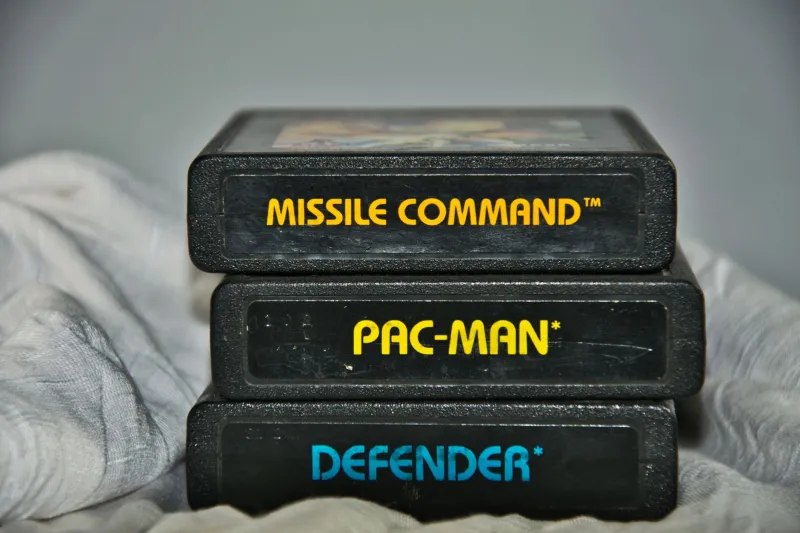
There's a version of gaming history that gets told a lot. Atari crashes in 1983, Nintendo rides in to save the day, everybody goes home happy. But that tidy narrative skips over something genuinely fascinating — the brief, chaotic window when the Atari 2600 was basically a publishing free-for-all, and anyone who could manufacture a cartridge could put a game in American living rooms without asking anyone's permission.
No licensing agreements. No approval process. No corporate gatekeeper standing at the door.
The games that came out of that era are some of the strangest, most overlooked artifacts in all of retro gaming. And right now, they're quietly becoming some of the most sought-after items in collector circles.
How the Wild West Started
Atari's original hardware design didn't include any kind of lockout mechanism. When the 2600 launched in 1977, the company wasn't thinking about third-party developers — the concept barely existed yet. By the time Activision broke away from Atari in 1979 and proved that outside studios could make and sell their own cartridges, the floodgates were already open.
Activision went legit, eventually. But the precedent they set attracted a much wider crowd. Through the early 1980s, dozens of small outfits — some with real development chops, some operating out of garages — started pressing cartridges and shipping them to retailers, mail-order catalogs, and discount chains without ever cutting a deal with Atari.
Some of these companies you've probably never heard of. Zimag. Froggo Games. Panda. Answer Software. These weren't household names then, and they're barely footnotes now. But they were real, and they were making real games — or at least, things that technically qualified as games.
The Stuff That Actually Holds Up
Here's where it gets interesting. Not everything from the unlicensed pile was garbage. Some of it was surprisingly inventive, precisely because the developers weren't answering to anyone.
Titan Games' Pepsi Invaders is a famous oddity — a custom version of Space Invaders commissioned by Coca-Cola for a 1983 sales convention, where the invaders spell out "PEPSI." Only 125 cartridges were ever made, and it was never sold commercially. It's a collector's holy grail now, not because it's a great game, but because it's a perfect little time capsule of corporate America doing something completely unhinged with early game hardware.
On the more legitimate side, companies like Xonox released double-ender cartridges — two games in one cartridge, playable from either end — that showed genuine hardware creativity. Their titles weren't blockbusters, but they demonstrated that developers outside Atari's orbit were still thinking hard about what the platform could do.
Then there's the genuinely weird stuff. Adult-oriented games from companies like Mystique pushed content that no licensed publisher would have touched. Games like Custer's Revenge are notorious for all the wrong reasons, but they exist as uncomfortable evidence of just how unregulated the market really was. No ratings board. No platform holder to pull the plug. Just a cartridge on a shelf.
Why Collectors Are Obsessed
If you spend any time in retro gaming communities — forums, Discord servers, the collector tables at gaming expos — you'll notice that unlicensed Atari titles carry a specific kind of mystique. Part of it is pure scarcity. Many of these games had tiny production runs and were sold through obscure channels. They didn't survive in the same numbers as first-party titles.
But there's something else going on. Collectors are drawn to these carts because they feel like contraband. They exist outside the official canon of gaming history. Finding a copy of a game that Atari never approved, that no major publication ever reviewed, that most people have never heard of — that scratches a very particular itch for people who love digging up things that weren't meant to be remembered.
Pricing is all over the place, which is part of the fun. A common unlicensed title might run you five bucks at a thrift store. A rarer variant, especially in original packaging with the manual, can command hundreds. The market is still figuring itself out, which means sharp-eyed collectors can still find undervalued stuff if they know what to look for.
What Modern Indie Devs Can Actually Learn Here
This is the part that doesn't get talked about enough. The unlicensed Atari era wasn't just a historical curiosity — it was a real-world experiment in what happens when the barriers to publishing collapse.
Sound familiar? It should. The indie game boom of the last fifteen years ran on almost the same energy. Steam's early open-door policy, itch.io's anything-goes ethos, mobile storefronts before curation kicked in — these all rhyme with the moment in 1981 when a small team could press a few thousand cartridges and ship them directly to consumers.
The lessons cut both ways. Creative freedom produces genuine innovation. It also produces a lot of junk. The unlicensed 2600 library is proof of both. For every genuinely interesting experiment, there were ten titles that were barely functional — games that existed to take up shelf space and move units, not to offer players anything worth their time.
What the best unlicensed developers figured out, though, was that constraints breed creativity. Working on aging hardware, without the resources of a major studio, without any safety net — that pressure pushed some developers to find solutions that the bigger players never bothered looking for. The double-ender cartridge format is a perfect example. Necessity invented it.
Modern indie devs who feel hemmed in by platform policies or market saturation might find some comfort — and maybe some inspiration — in looking back at the people who just decided to make the game anyway and figure out distribution later.
Digging Them Up
If you want to start exploring this corner of retro gaming, the good news is that the barrier to entry is lower than you might think. Most unlicensed 2600 titles are still affordable compared to rarer licensed games. The tricky part is identification — without the official Atari seal on the box, these carts can be hard to distinguish from knockoffs or homebrews made decades later.
The Atari Age database is an essential resource. It catalogs licensed and unlicensed titles alike, with production details, rarity ratings, and community notes that'll help you figure out what you're actually holding when you pull something weird out of a bin.
Emulation is also a perfectly reasonable way to explore the library before committing to physical collecting. Most of these titles are legally murky enough that the usual abandonware conversations apply — but if you want the real experience, there's nothing quite like holding one of these anonymous little black cartridges and knowing that it exists completely outside the official record.
The Atari 2600's wild west era only lasted a few years before the crash wiped out most of the independent publishers and Nintendo came in with its licensing hammer. But the games those years produced are still out there, waiting to be found. Some of them are terrible. Some of them are genuinely surprising. All of them are part of a story that gaming history tends to skip past too quickly.
Time to dig.