Carts Over Code: The Real Reasons Retro Collectors Are Ditching Their ROM Libraries for the Real Thing
For a while there, the dream was simple: one hard drive, every game ever made, zero clutter. A ROM collection felt like the ultimate flex — a digital museum you could carry in your pocket. But spend any time in retro gaming circles right now and you'll notice something strange. People are selling those libraries off. Not trading them for newer games, not upgrading to better emulation setups. They're heading to eBay, local game stores, and flea markets to track down the actual cartridges and consoles they thought they'd replaced for good.
So what happened?
The Honeymoon With Emulation Is Over — Sort Of
Let's be clear: emulation isn't going anywhere. For a lot of players, it's still the most practical way to experience games from systems they can't afford or simply can't find. But "practical" and "satisfying" aren't always the same thing, and that gap is exactly where this whole shift lives.
Marcus, a 34-year-old from outside Columbus, Ohio, spent the better part of a decade building what he describes as a "ridiculously complete" ROM library. He had everything — obscure Japanese releases, prototype builds, regional variants most people have never heard of. Then one afternoon he sat down to actually play something and found himself scrolling through a file list for twenty minutes without committing to a single title.
"I had access to literally thousands of games and I played almost none of them," he says. "It started to feel less like a collection and more like a spreadsheet."
That feeling — call it digital paralysis, or maybe just the grass-is-greener effect — comes up constantly when you talk to collectors who've made the switch. Having everything available is, paradoxically, a little bit numbing.
The Weight of the Real Thing
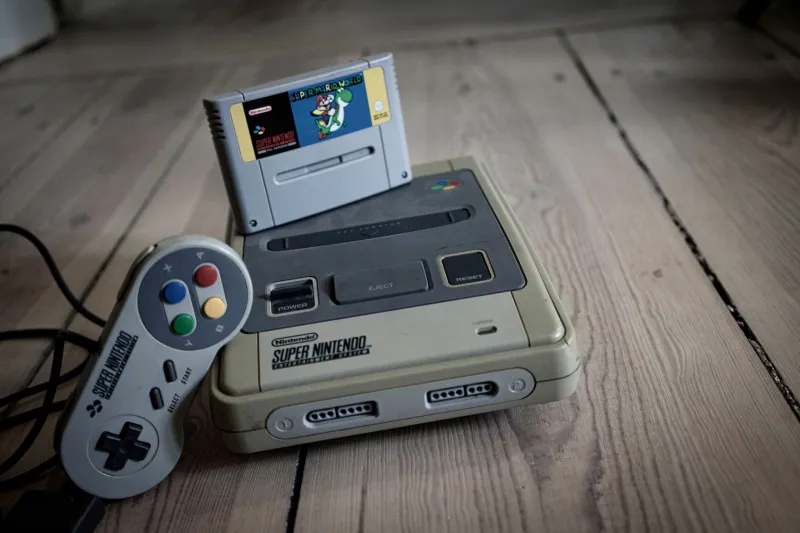
There's a reason people still buy vinyl records. The ritual matters. Pulling a cartridge off a shelf, blowing on the contacts out of habit even though you know it probably doesn't help, sliding it into a slot and hearing that click — none of that translates through a menu screen. And for a certain kind of collector, that physical experience is the whole point.
Jenna, a 28-year-old in Austin who got into retro gaming during the pandemic, came at it from the opposite direction. She started with emulation because it was free and easy. But after a while, she wanted something she could actually hold.
"I didn't grow up with most of these games," she explains. "I'm not chasing a memory. I just wanted something real. Something I could put on a shelf and actually own."
That distinction — ownership versus access — is huge right now. In an era where streaming services pull content without warning, where digital storefronts shut down and take your library with them, there's a real appeal to having a physical object that nobody can revoke. A cartridge doesn't require a server. It doesn't need a subscription. It just works, assuming the battery backup hasn't died.
Community Is Pulling People Toward the Physical, Too
Spend time on retro gaming subreddits, Discord servers, or at local game swap meets and you'll notice the social currency flows toward original hardware. Showing off a complete-in-box copy of a sought-after title hits different than screenshotting a ROM folder. It's not just gatekeeping — though that exists too — it's that the stories attached to physical copies are richer.
Where did you find it? What did you pay? Did the previous owner leave a save file? That last one sounds trivial until you load up an old RPG and find someone else's 40-hour playthrough sitting there, a little ghost of a stranger's childhood.
Those stories don't exist in a ROM. The metadata is stripped out. The history is gone.
Derek, a collector from the Chicago suburbs who runs a small YouTube channel covering Game Boy titles, puts it bluntly: "Nobody wants to watch me open a zip file. But a haul video from a thrift store? That gets engagement every single time."
The Authenticity Question Nobody Wants to Fight About
Here's where it gets a little thorny. Part of the push toward original hardware comes from a growing discomfort with the legal and ethical murkiness of ROM collecting. Most people in the hobby have made their peace with emulation in some form, but there's a contingent that's started to feel uneasy — not because of enforcement risk, which remains pretty low for personal use, but because of principle.
When a small indie developer releases a game, or when a niche publisher is still technically selling a title, downloading a ROM copy starts to feel different than pulling a decades-old Atari cartridge off a shelf. The lines are blurry, and different collectors draw them in different places. But the conversation is happening more openly than it used to, and for some people, moving toward physical media is partly a way of resolving that discomfort.
Not everyone agrees, and that's fine. But it's worth acknowledging that the shift isn't purely about vibes — there's a values component in there for a meaningful chunk of the community.
What You Actually Lose in the Switch
None of this is to say going physical is without tradeoffs. It's expensive. A complete set for certain systems will run you hundreds or thousands of dollars, and prices on even mid-tier titles have climbed steadily over the last several years. Storage is a real issue — cartridges take up space, consoles need shelf room, and cables multiply like rabbits.
There's also the preservation angle. Physical media degrades. Batteries die. PCBs corrode. A ROM, whatever its other limitations, doesn't rot. For players who are genuinely invested in keeping gaming history alive, digital backups serve a purpose that a shelf of cartridges simply can't replicate at scale.
And honestly? Some games just aren't worth hunting down physically. If you want to play a deep-cut Japanese PC-98 title, a ROM is probably your only realistic option unless you've got serious money and patience.
The Hybrid Approach Most Collectors Land On
What's actually happening in practice, for a lot of people, is a kind of triage. They're keeping emulation for exploration — using it to try things out, to play titles they're curious about but not committed to. And they're buying physical copies of the games that actually mean something to them. The ones they want to replay, display, or share.
It's less of a migration and more of a renegotiation. The ROM library doesn't disappear entirely; it just stops being the whole collection and starts being the research phase.
Marcus, back in Ohio, eventually landed here too. His hard drive is still around. But his living room now has a shelf of cartridges that he actually plays, and a CRT he rescued from a neighbor's curb.
"I didn't hate emulation," he says. "I just needed to remember why I started playing games in the first place. And that wasn't about having everything. It was about having the right things."
That's probably the most honest summary of what's driving this whole shift. Not a rejection of digital convenience, but a recalibration toward meaning. In a hobby built on memory and feeling, sometimes the only format that makes sense is the one you can hold in your hands.